

Beyond the Frame: Art as an Investment?
Key Takeaways
- Art is a sizable global market that has historically been dominated by wealthy collectors, but fractional ownership and online platforms are making it accessible to a wider group of investors.
- Art may offer diversification potential because prices can be influenced by scarcity, collector demand and global wealth creation rather than the same forces that move stocks and bonds.
- Investing in art also carries significant risks, including limited liquidity, subjective valuations, high transaction costs and uncertainty surrounding the future demand for an individual artist or work.
When Citadel founder Ken Griffin reportedly paid around $500 million for two paintings, or hedge fund manager Steven Cohen spent $137.5 million on a single de Kooning, it is worth asking a simple question: why would some of the most successful investors in the world put that kind of money into art?
For centuries, art has represented much more than decoration. It has conveyed wealth, preserved history and let collectors take part in the cultural movements of their time. Increasingly, it is also being viewed as an investable asset.
Purchases at that level remain far out of reach for most people and buying a lower‑priced work is not the same as owning a blue‑chip masterpiece. What is changing is access: fractional ownership and online platforms now let investors buy a fractional interest in higher‑value works rather than an entire piece, opening a market once available primarily to the wealthy.
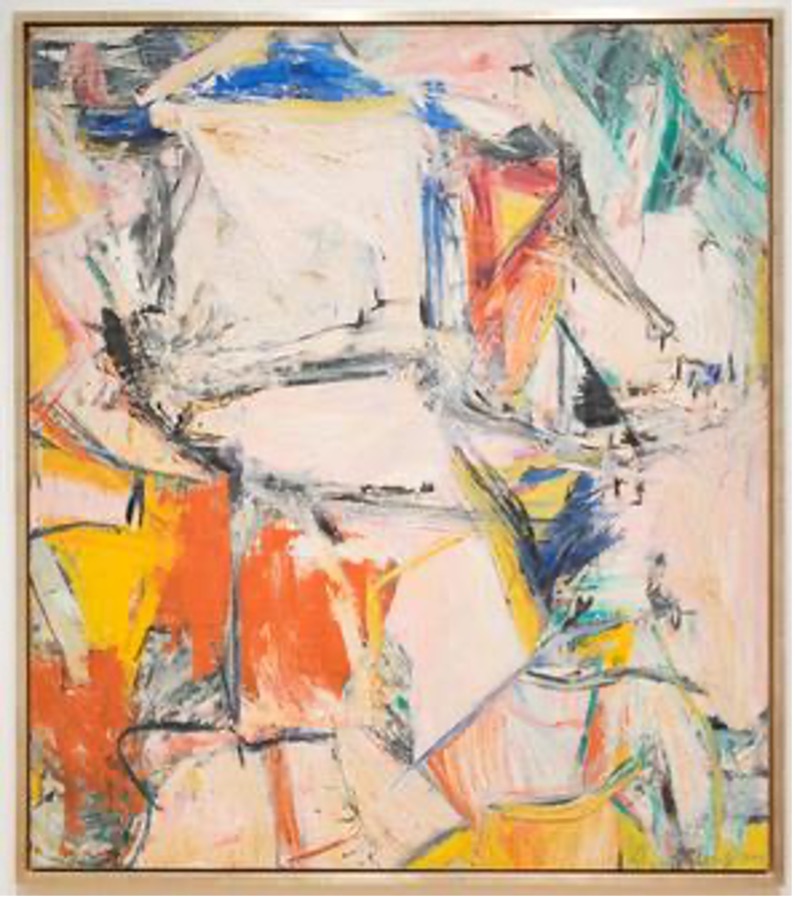
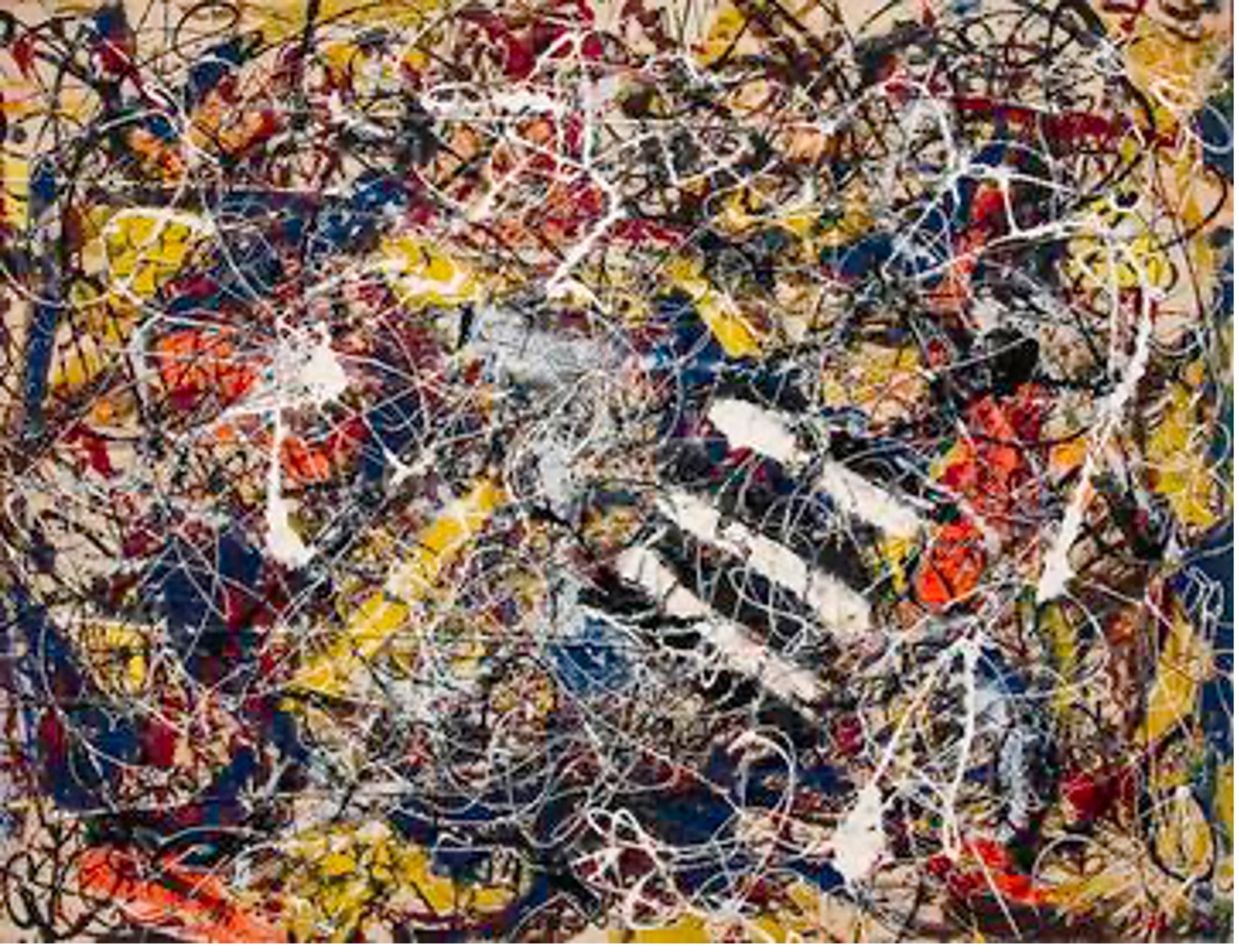
Left: Willem de Kooning, Interchange (1955). Right: Jackson Pollock, Number 17A (1948).
A Bigger Market Than Many Investors Realize
Global art sales rose 4% to an estimated $59.6 billion in 2025, with roughly 41.5 million transactions, according to the Art Basel and UBS Global Art Market Report 2026.
Beyond annual sales, Deloitte estimates ultra‑high‑net‑worth individuals held approximately $2.56 trillion in art and collectibles in 2024.
Still, the size of the overall market says little about how an individual artwork might perform. Values vary widely across categories and even among works by the same artist, as quality, rarity, condition and provenance all influence what a buyer will pay.
What May Drive Prices
A few forces may support demand for established, or "blue‑chip," art. The first is growing global wealth. Knight Frank projects the world's ultra‑high‑net‑worth population will expand by roughly 28% over five years, and Deloitte estimates about $992 billion in art and collectibles may change hands over the next decade as assets pass to the next generation.
Supply is the second factor. An artist can produce only a finite number of works, and that supply becomes fixed after the artist's death, shrinking further as pieces enter permanent museum collections. A third force is cultural: interest in art remains broad and durable, with leading museums drawing well over 100 million visitors a year.
Because these forces differ from the earnings and interest rates that drive stocks and bonds, art has historically shown low correlation to traditional markets, the core of its potential diversification appeal. Those benefits come with caveats, though. Return and correlation estimates are typically based on price indexes rather than an investable portfolio. Such indexes may exclude works held privately, donated to museums or never resold, and may leave out the costs of buying, owning and selling art. Actual results may differ.
Access is Changing
Historically, investing in high-value art required considerable capital, expertise and relationships with galleries, dealers, and auction houses. Fractional ownership is changing that model, lowering the financial barrier and making it possible to spread an allocation across multiple pieces. Wealth managers have expanded their involvement too, with the share offering art-related services rising from about 25% in 2011 to 51% in 2025, according to Deloitte.
But access and liquidity are not the same thing. An investor may still have to hold for several years while waiting for a work to sell, and returns ultimately depend on the price received, less the fees and expenses of the investment structure.
Look Beyond the Auction Headlines
Record-setting sales can make art investing seem deceptively simple. Leonora Carrington’s Les Distractions de Dagobert, for example, reportedly sold for approximately $475,500 in 1995 and for $28.5 million in 2024. Results like that naturally capture investors’ attention.
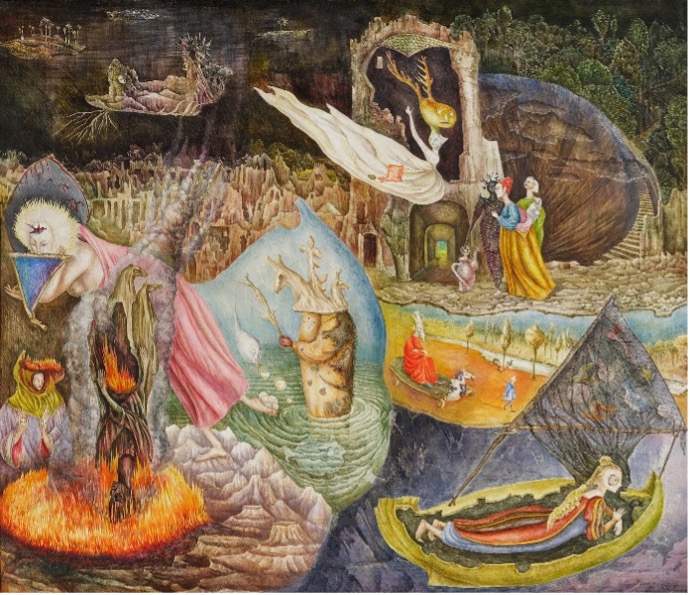
Lenora Carrington, Les Distractions de Dagobert (1945)
But not every artist stays popular, and not every work appreciates. Even pieces by established artists can produce very different results depending on the purchase price, quality and timing of the sale, so market‑wide averages reveal little about how any single artwork will perform. Art is also expensive to own and trade, involving commissions, insurance, appraisals, storage and conservation, and finding a buyer can take time. Authenticity and provenance add further risk: a disputed attribution, gap in ownership history or undisclosed restoration can materially affect a work's value.
The Art of Balance
Art occupies an unusual space, a financial asset, a tangible object and a source of personal enjoyment all at once. That combination is part of its appeal, but it also makes art hard to evaluate using the framework applied to stocks or bonds.
For collectors, the aesthetic and cultural rewards may matter as much as the return. Ken Griffin, whose purchases opened this discussion, keeps nearly his entire collection on public view and has said that letting "700,000 or a million people a year" see great art gives him "great satisfaction." Notably, even while paying record sums, he once called rising art prices a "cause for concern," a reminder that passion, not expected return, often drives collecting at the highest levels.
For everyday investors, the challenge is greater. The very qualities that make art rewarding to own, its uniqueness, scarcity and cultural weight, also make it hard to value, costly to hold and slow to sell, leaving far less room for error. That means understanding the structure, doing thorough due diligence and weighing fees, liquidity, diversification and time horizon, and recognizing that art, when appropriate, may be better suited to complement a diversified strategy than to replace traditional investments.
Art may catch the eye in an instant. Determining whether it belongs in a portfolio requires a much closer look.
Invest wisely and live richly,
Ryan
The opinions expressed in this commentary are those of the author and may not necessarily reflect those held by Kestra Advisor Services Holdings C, Inc., d/b/a Kestra Holdings, and its subsidiaries, including, but not limited to, Kestra Advisory Services, LLC, Kestra Investment Services, LLC, Kestra Private Wealth Services, and Bluespring Wealth Partners, LLC. The material is for informational purposes only. It represents an assessment of the market environment at a specific point in time and is not intended to be a forecast of future events, or a guarantee of future results. It is not guaranteed by any entity for accuracy, does not purport to be complete and is not intended to be used as a primary basis for investment decisions. It should also not be construed as advice meeting the particular investment needs of any investor. Neither the information presented nor any opinion expressed constitutes a solicitation for the purchase or sale of any security. This material was created to provide accurate and reliable information on the subjects covered but should not be regarded as a complete analysis of these subjects. It is not intended to provide specific legal, tax or other professional advice. The services of an appropriate professional should be sought regarding your individual situation. Kestra Advisor Services Holdings C, Inc., d/b/a Kestra Holdings, and its subsidiaries, including, but not limited to, Kestra Advisory Services, LLC, Kestra Investment Services, LLC, Kestra Private Wealth Services, and Bluespring Wealth Partners, LLC, do not offer tax or legal advice.