


Putting your future health care wishes in writing, typically through documents like an advance directive or living will is important. Unexpected end-of-life situations can happen at any age, so it's important for all adults to prepare these documents. By planning ahead, you can get the medical care you want, avoid unnecessary suffering and relieve caregivers of decision-making burdens during moments of crisis or grief.
Benefits of planning ahead:
Ensuring Your Preferences Are Followed
By documenting your wishes in advance, you can ensure that your preferences for medical treatment are known and respected, even if you are unable to communicate them later due to illness or injury.
Relieving Burden on Loved Ones
It can be very difficult for family members to make decisions about your care if they don't know your preferences. Having your wishes written down can relieve them of the burden of making potentially difficult decisions on your behalf.
Legal Recognition
In many jurisdictions, advance directives and living wills have legal status. This means that healthcare providers are obligated to follow the instructions you have provided, within the bounds of the law.
Clarifying Your Intentions
Sometimes, medical situations arise where the appropriate course of action isn't clear. Your written instructions can provide clarity to healthcare providers and your family about your intentions regarding specific medical interventions.
Peace of Mind
Knowing that you have made your wishes known can provide you with peace of mind, knowing that you have some control over your future medical care.
Emergency Situations
In emergencies, healthcare decisions often need to be made quickly. Having your wishes documented can ensure that your values and preferences are considered even in urgent situations.
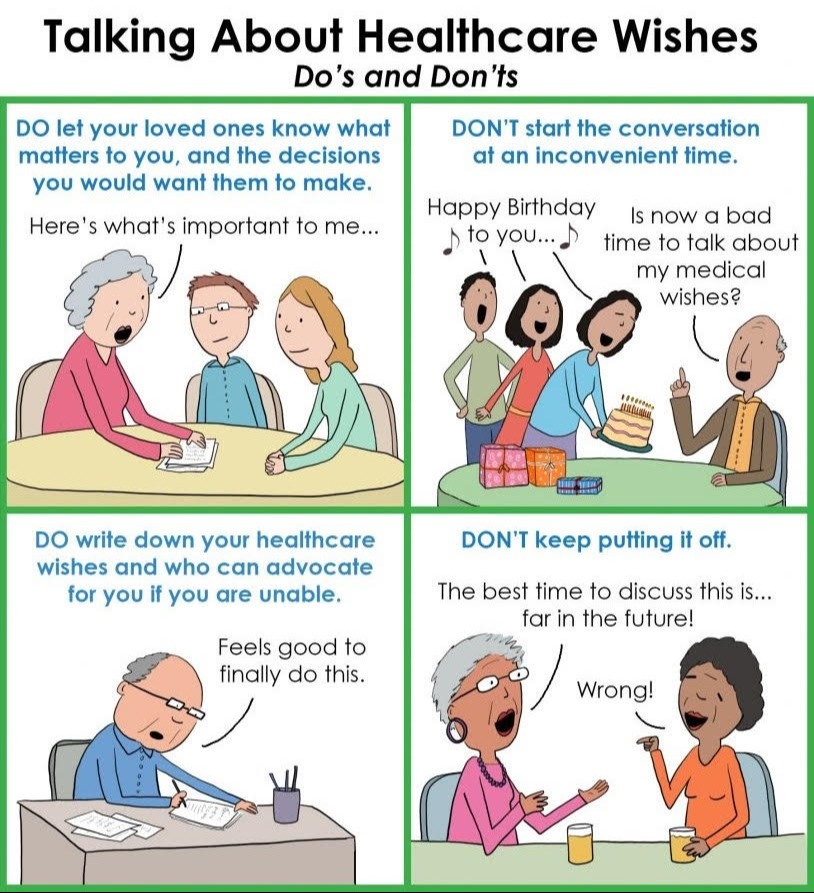
Putting your future healthcare wishes in writing is a proactive step that ensures your autonomy and dignity are maintained, even in challenging circumstances where you may not be able to speak for yourself.

Eat your way to better health
- As you get older, your nutritional needs may change. Make sure you’re including a variety of foods in your diet. The National Institute on Aging offer these suggestions for choosing healthy meals:
- Drink plenty of liquids. Avoid or limits ones with lots of added sugar or other ingredients, like soda.
- Make eating a social event. Even if you live alone or are social-distancing, you can set up a video call and encourage friends or family to join as you all eat together.
- Know what a healthy portion size is.
- Use herbs and spices to amp up the flavor of your meals without adding additional sugar or sodium.
Eating well is the foundation for your whole picture of wellness and can make you look and feel better in every aspect of your life.
Tip adapted from otterbein.org

“To keep the heart unwrinkled — to be hopeful, kindly, cheerful, reverent — that is to triumph over old age.”
~Thomas Bailey Aldrich
Photo by Chris Axe // Getty Images

The glowing sun appears in the "keyhole" of the Pfeiffer Beach rock in Big Sur, California.
For more information, please visit our Upcoming Events page by clicking HERE.