


Understanding CPI: What It Is, How It’s Calculated, and Where It Stands Now
Inflation affects nearly every part of our lives—from the cost of groceries to rent to gas prices. One of the most closely watched measures of inflation is the Consumer Price Index (CPI). Here’s a breakdown of how it works, what’s in it, and where it stands today.
What Is CPI?
The Consumer Price Index (CPI) measures the average change in prices that urban consumers pay for a basket of goods and services. It’s reported monthly by the U.S. Bureau of Labor Statistics (BLS) and is widely used to track inflation.
How CPI Is Calculated
The Market Basket – The BLS surveys consumer spending habits to build a “basket” of goods and services that represents typical household expenses.
Price Collection – Every month, prices are gathered from thousands of stores, service providers, and landlords across the country.
Weighting – Categories are weighted based on how much of household spending they represent. For example, shelter (rent and housing costs) carries the most weight, while things like apparel or recreation are smaller portions.
Aggregation – All categories are combined into an overall index, which is tracked month to month and year over year.
What’s in CPI?
The CPI basket covers a wide range of everyday expenses, including:
Shelter (largest share) – Rent and owners’ equivalent rent.
Food & Beverages – Both groceries and dining out.
Energy – Gasoline, electricity, natural gas, and heating fuels.
Transportation, Healthcare, Education, Apparel, and Recreation – Smaller but still meaningful components.
Headline CPI vs. Core CPI
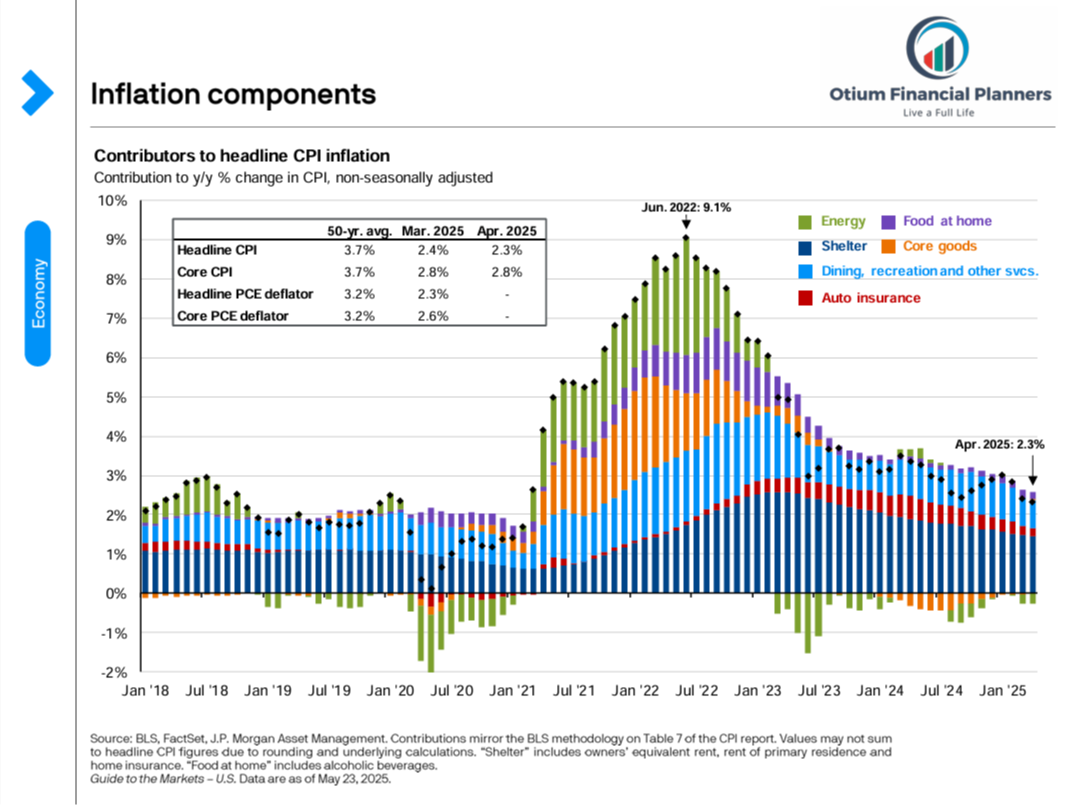
Headline CPI includes all items in the basket—food, energy, housing, healthcare, and more. It’s the broadest measure and shows the overall inflation rate that consumers feel.
Core CPI excludes food and energy, since these categories tend to be very volatile month to month. Economists and the Federal Reserve often look at core CPI to better gauge underlying inflation trends.
What’s the Current Level? (July 2025 Data)
Headline CPI: Up 0.2% month-over-month, and 2.7% year-over-year.
Core CPI: Up 0.3% month-over-month, and 3.1% year-over-year, the fastest pace since February.
Shelter and services were among the biggest drivers of inflation, while food and energy costs were relatively stable.
Why CPI Matters
Everyday Impact: CPI affects cost-of-living adjustments (like Social Security payments) and wage contracts.
Economic Policy: The Federal Reserve uses CPI trends to guide interest rate decisions.
Investor Outlook: Rising inflation can affect markets, interest rates, and long-term financial planning.
How Otium Financial Planners Can Help
Inflation doesn’t just affect national headlines—it affects your budget, your investments, and your long-term financial security. At Otium Financial Planners, we can help you build and adjust your financial plan to keep your long term goals on track.